
Practical Information for Everyone
Some useful information about traveling on our transport network
At the stops
Stop locations are determined as much as possible by passenger needs. However, they also depend on road infrastructure and are subject to approval from the authorities. This is why some transfers can be very demanding.
To help you find your way between two points at the same stop, you will find connection maps and/or signage on the stop posts.
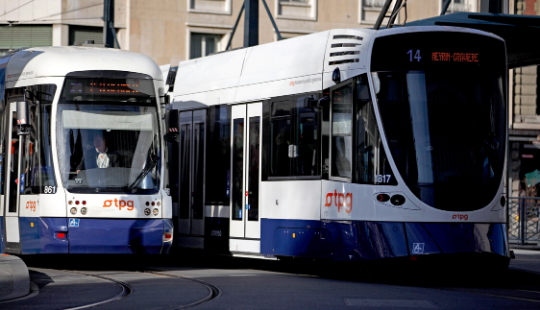
Layout of the stops (height of the sidewalks and platforms, bus shelters, garbage cans, pedometer strips for the visually impaired and blind, etc.) is handled by the municipalities, while the posts and distributors are installed and managed by tpg, subject to the necessary authorizations.
There are different kinds of information at the stops, depending on the frequency of use of the stop and the space available:
- on the post (or totem): name of the stop, line(s) serviced, and destination(s);
- timetables of the lines serving the stop;
- network map;
- connection map;
- upcoming departures in real time (electronic terminal);
- fare information on tickets and extracts from the conditions of transport (DRT-tpg) on the distributors.
Request Stops
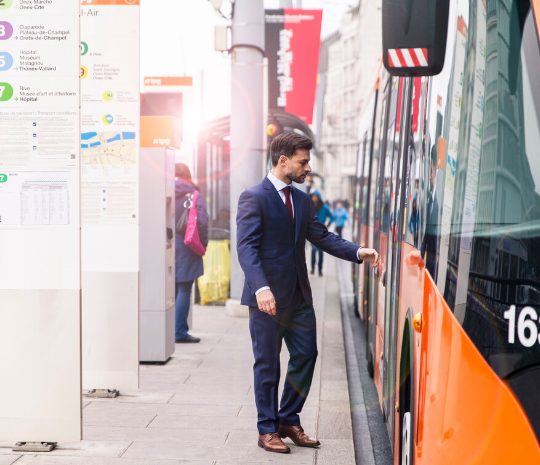
For request stops, remember to wave to the driver as the bus approaches the stop!
Opening the Doors
Opening and closing of the doors is automatic, but for your comfort and safety, some buttons allow you to avoid the automatic closing.
Red, blue and yellow buttons: use them correctly!
Red button
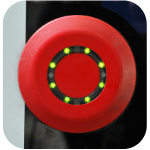
From the outside as well as the inside of the vehicle, the buttons can open the doors. However, this only happens when the driver has validated the stop, in order to avoid any risk of opening the doors outside the stops.
There is no need to press the button from the outside before the light comes on around the button (except for old trolley buses)!
From inside the vehicles, the buttons also allow you to request the stop (essential for stops on demand).
Blue button
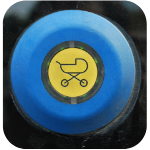
Once the door is open (unlike the opening caused by the red buttons), closing is not automatic, but rather controlled by the driver, who will make sure that the door is clear before closing it again.
This button is therefore reserved for people with reduced mobility or traveling with a baby stroller; it must be used in these cases to ensure traveler safety!
Citaro Bus Exterior Buttons
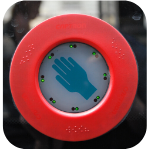
This type of button should not be operated with the finger, but instead with the whole hand simply placed on the light detectors.
Terms and conditions of transport
The rights and obligations of passengers and the conditions under which they can use our tpg network are described in our regulations for transport of passengers, luggage, and animals on the network.
Cameras for the safety and security of everyone
In accordance with the provisions of the federal law on passenger transport, the ordinance on video surveillance in public transport, and other federal and cantonal regulations in force, tpg has equipped all of its vehicles, its points of sale, and its sites (maintenance centers) with surveillance cameras.
The purpose of this monitoring is to:
- to protect staff, travelers, customers, and visitors from aggression and incivility;
- to ensure the security of valuables;
- to prevent damage to the property of staff, travelers, customers, visitors, and the company;
- to allow for passenger identification in order to ensure the safety of the company's operations.
Test deployment of AI devices to improve incident detection and response
From September 1st to December 15th 2026, TPG is testing a new technology designed to improve the responsiveness of operators and enable TPG to implement an effective and proportionate incident response by means of video surveillance in the future.
To this end, and in the test tram n° 1834 (running on the Lines 12, 14, 15 or 18), an on-board computer automatically detects abnormal events (falls, abandoned luggage, overdensity, etc.) using existing video surveillance. During the test, the data is processed on board the tram in question and is not streamed live. The device does not use biometrics: it is not able to recognize people or identify them.
The data resulting from the device is processed only by tpg-approved employees, in compliance with data protection and in accordance with the provisions of the Federal Act on Passenger Transport and the Ordinance on Video Surveillance in Public Transport.
At the same time, tpg is equipping new autonomous vehicles that will start driving on tpgFlex with a similar test algorithm, as part of the European Ultimo and AutoTrust projects.
The aim of the system is, again, to contribute to passenger safety, incident management and the evaluation of the operation of the autonomous vehicle service. It will analyse, locally in the vehicle, the CCTV images and the sound intensity of the passenger area. However, the sound itself will not be analyzed or even captured.
The test algorithm will thus detect, through the image and/or sound intensity, abnormal events (discomfort, aggression, conflicts, vandalism, smoke, forgotten luggage, etc.). He will not be able to recognize people, nor to identify them, either by image or voice. During the test, the system will run locally and will not transmit a stream of images. In the event of an alert, only a short 10-second video excerpt, without sound, can be sent to an operator. Access to the data will remain strictly reserved for authorised personnel, in compliance with data protection.
What to do in case of an incident?
In the event of a security breach, the traveler should ask the train crew to mark the images immediately after the incident.
If you are unable to contact the driver, please contact customer service.
In order to process your request as quickly as possible, please provide us with the following information:
- the date and time you entered the vehicle;
- the place (stop where you got into the vehicle);
- the line number;
- the direction of the vehicle;
- the tpg vehicle number (or, failing that, the vehicle type or plate number);
- your physical description and clothing at the time of the incident;
- the location where you were in the vehicle at the time.
The conditions for the use of video surveillance on board tpg vehicles as well as passenger rights are described in the regulatory provisions for the transport of passengers, luggage, and animals (DRT-tpg) .
School outings
In order to facilitate your travel during school outings, we have set up a small procedure that will allow our driving staff to ensure you have a stress-free trip.
The D-Day
It's D-Day, your class is ready to go to the place of the activity. If several classes are moving at the same time, try, as much as possible, to stagger your departures to avoid more than two classes getting into the same vehicle. The speeds of our vehicles are relatively close. It is often enough to wait a few minutes at a stop to see another vehicle arrive.
At a standstill
To make it easy for our drivers to see you, head to the front of the vehicle at the
of the 2nd gate. It is equipped with a blue or yellow button, which allows manual opening/closing controlled by the driver, which guarantees safe entry or exit.
On board
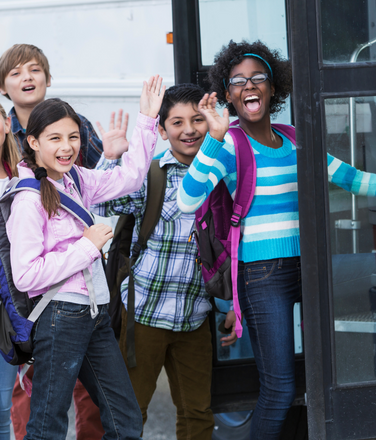
To ensure a smooth ride, make sure students are seated or holding on to the bars
security measures. The vehicle may have to brake suddenly and cause falls. As far as possible, make sure that the noise level in the group is as low as possible so as not to disturb other users and the driving staff.
Getting off the vehicle
Once you arrive at the destination stop, make a distinct sign to the driver to let them know that all students are outside and that the vehicle is ready to leave.